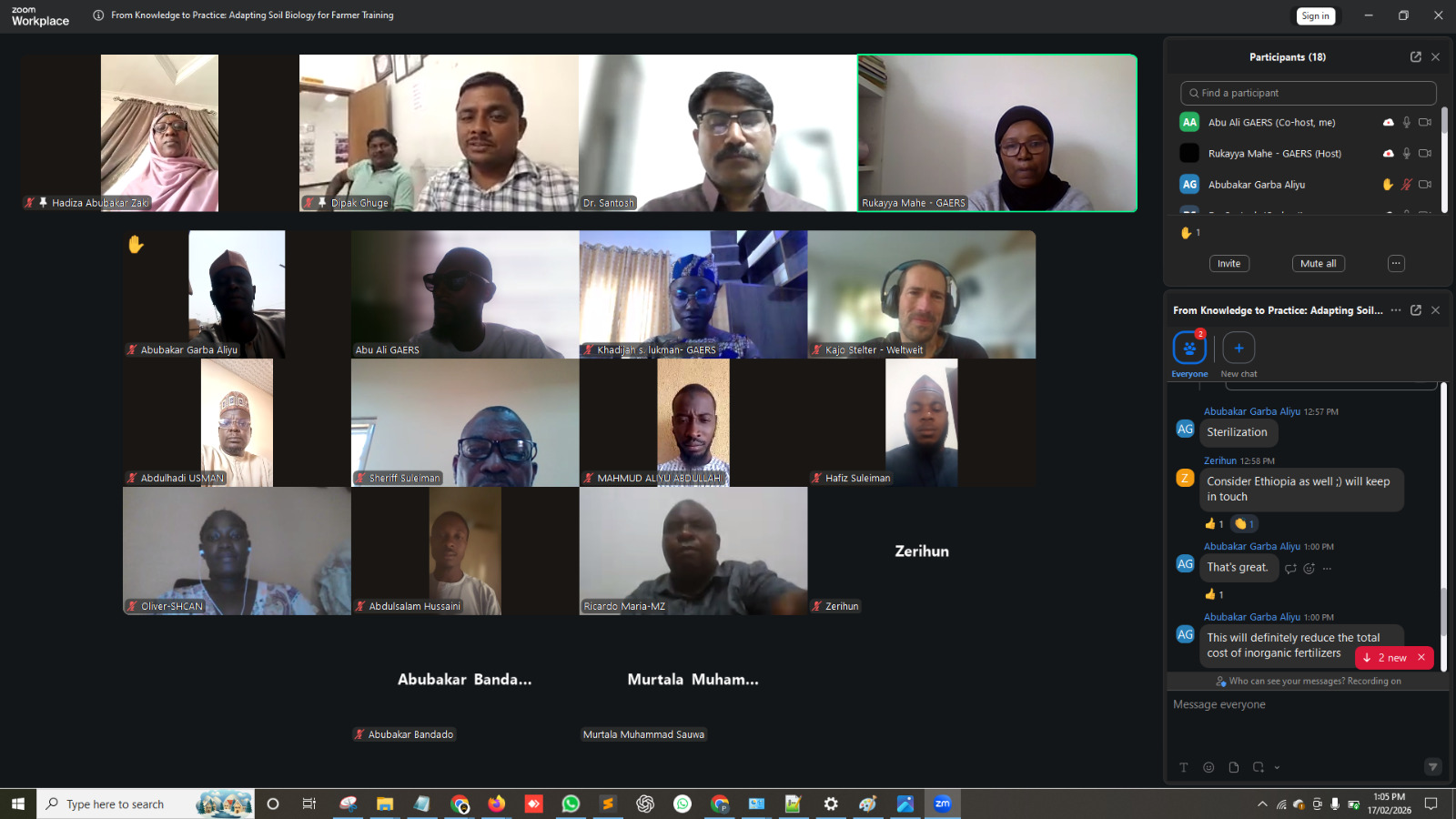
As part of the Building Soil Health (BSH) Programme – Phase II, GAERS officially launched its Training of Trainers (ToT) Webinar Series on 7th February 2026, marking a major step in preparing local facilitators and farmer leaders for practical field implementation.
The virtual training series brings together participants from across Sokoto State and beyond, including Community-Based Advisors (CBAs), lead farmers, extension actors, and technical partners. The aim is to strengthen local capacity by equipping frontline actors with practical, low-cost innovations that can be tested, adapted, and shared within farming communities.
Key Learning Themes Covered
The ToT sessions feature a range of regenerative and farmer-centered approaches delivered by experienced facilitators and international collaborators, including:
- GLIDE Livelihood Design Approach – helping farmers build resilient livelihoods based on existing local resources and market opportunities
- Root Feast Method (RFM) – low-water tree establishment and strategic water management for dryland systems
- Microbial Soil Fertility Systems – practical methods for improving soil life and nutrient availability
- Compost and Natural Bio-Inputs – converting local waste materials into affordable soil fertility solutions
- PMDS Dry Sowing Methods – low-cost approaches for early planting, moisture conservation, and climate resilience
Why This Matters
The ToT model ensures that knowledge does not stop at the webinar level. Participants are being prepared to become community-level multipliers, capable of training other farmers through demonstrations, peer learning, and localized support.
This approach helps GAERS scale impact by building a network of trained local actors who understand both the innovations and the realities of smallholder farming systems.
Next Phase
Following the webinar series, participants move into physical workshops, group field trials, and demonstration plot activities at the GAERS training and farm site—turning learning into visible results.
Expected Impact
Through this model, GAERS aims to strengthen farmer knowledge systems, improve soil health practices, reduce input dependency, and support more resilient agricultural livelihoods across Northern Nigeria.
GAERS – Empowering Farmers • Strengthening Food Systems